 Albanien
 Amerikas Forenede Stater
 Argentina
 Australien
 Belgien
 Bosnien-Hercegovina
 Brasilien
 Bulgarien
 Canada
 Chile
Chile
 Colombia
 Danmark
 Estland
 Filippinerne
 Finland
 Frankrig
 Grækenland
 Irland
 Italien
 Kroatien
 Letland
 Litauen
 Luxembourg
 Mexico
 Moldova
 Montenegro
 Nederlandene
 New Zealand
 Nordmakedonien
 Norge
Norge
 Polen
Polen
 Portugal
 Rumænien
 Schweiz
 Serbien
 Slovakiet
 Slovenien
 Spanien
 Storbritannien
 Sverige
 Sydafrika
 Tjekkiske Republik
 Tyrkiet
 Tyskland
 Ukraine
 Ungarn
 Østrig







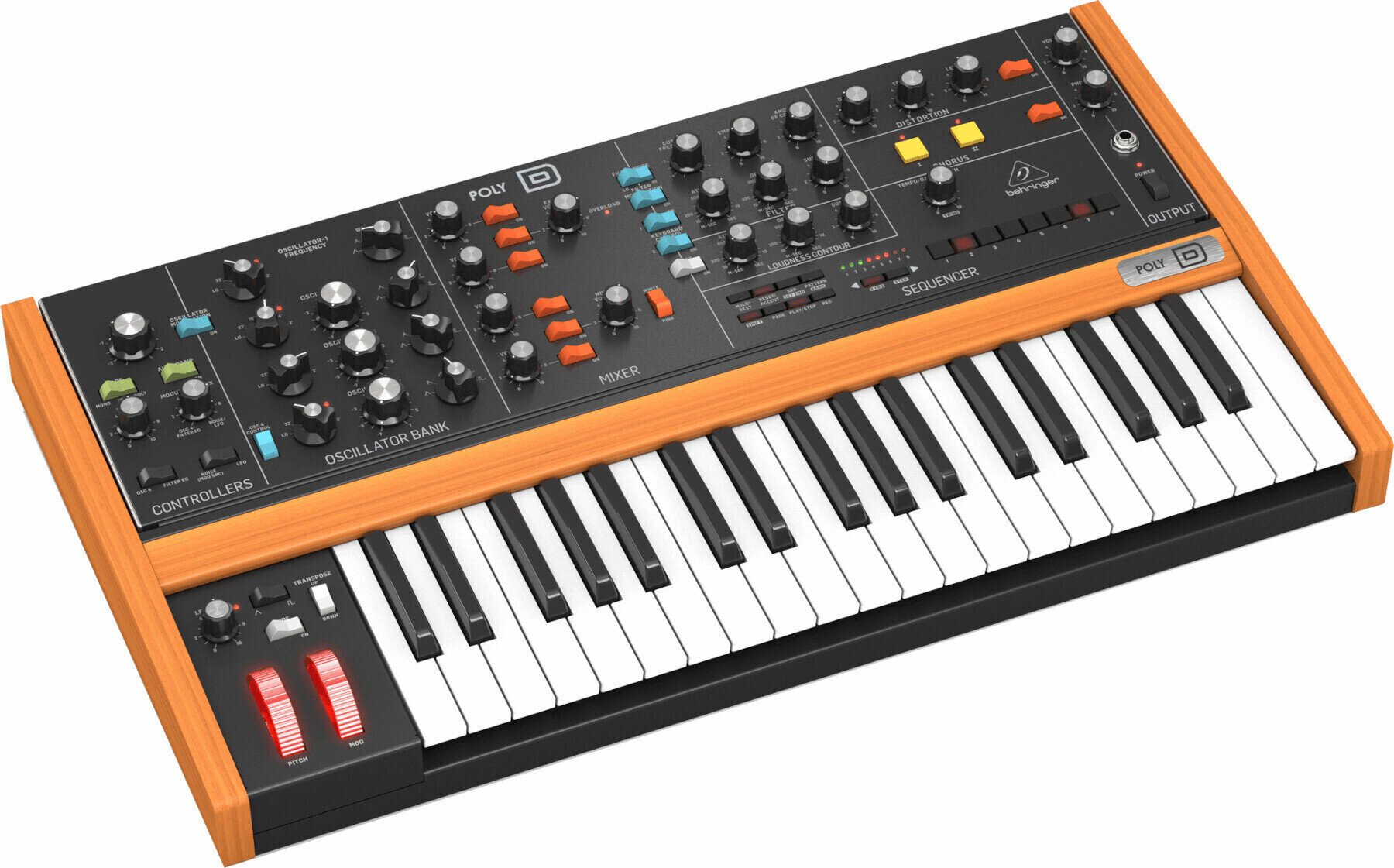
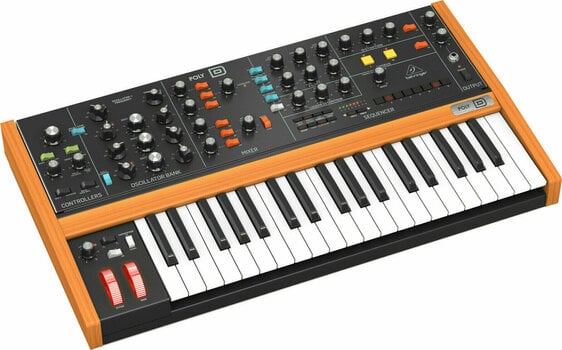
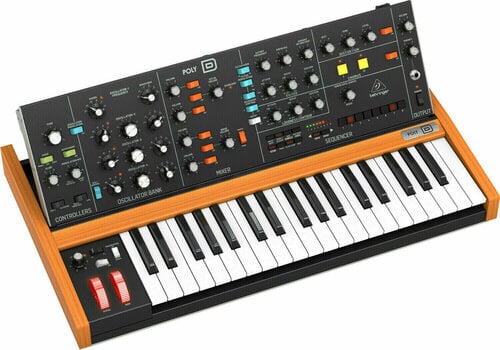
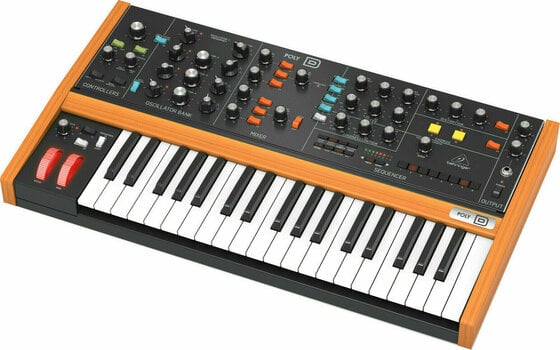

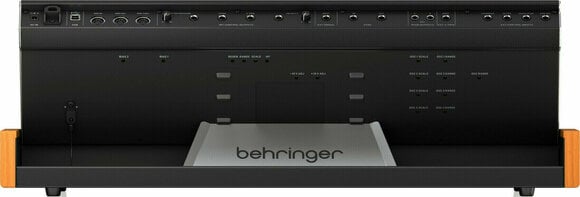
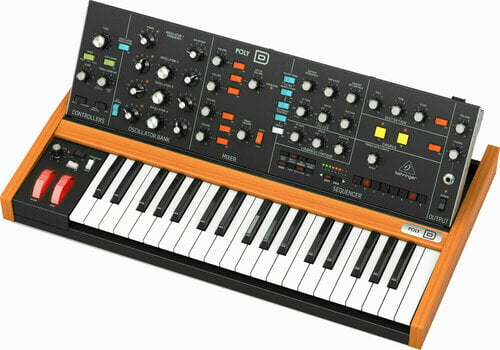
Behringer POLY D Synthesizer
The Behringer POLY D is an analog 4-voice polyphonic synthesizer that pays tribute to the iconic 1971 Minimoog Model D while adding modern features like a fourth oscillator, BBD stereo chorus, and onboard sequencer. With 37 full-size velocity-sensitive keys, an authentic 24 dB ladder filter, and a pure analog signal path, it delivers the fat basses and searing leads that defined progressive rock and synth-pop. Switchable Mono, Poly, and Unison modes let one player cover everything from expressive solos to lush chord pads.
- Four independent analog VCOs with five selectable waveforms each, spanning a six-octave range for massive sound design flexibility.
- Classic 24 dB ladder filter with switchable low-pass and high-pass modes plus dedicated envelope shaping for vintage character.
- Built-in 32-step sequencer and arpeggiator with 64 patterns across 8 banks, ready for hands-off performance and studio work.
- J60-modeled BBD stereo chorus and DS1-modeled analog distortion add width and grit without external pedals.
Behringer POLY D Analog Polyphonic Synthesizer — Four Voices of Classic Analog Power
The Behringer POLY D is a 4-voice analog polyphonic synthesizer built around the legendary architecture of the 1971 Minimoog Model D, expanded with modern performance features for today's keyboardists. Its pure analog signal path runs through authentic VCO, VCF, VCA, and ladder filter circuits, giving players the same fat basses, blistering leads, and progressive organ tones that defined an era of music. The POLY D is the right choice for synthesists who want genuine analog sound and real-time knob-per-function control without menu diving.
Four VCOs, Three Modes, and a Ladder Filter at the Core
What separates the POLY D from a standard mono reissue is its fourth voltage-controlled oscillator and switchable Mono, Poly, and Unison modes, letting a single instrument cover expressive leads, four-note chord harmonies, and stacked unison thickness. The 24 dB ladder filter with switchable low-pass and high-pass operation, plus dedicated Attack, Decay, and Sustain envelope controls, sits at the heart of its sound. J60-modeled BBD stereo chorus and DS1-modeled analog distortion circuits are integrated directly into the signal path, expanding the tonal palette without external pedals.
Keyboard, Polyphony, and Performance Controls
The 37-key semi-weighted keyboard with full-size keys, velocity sensitivity, and aftertouch gives performers expressive control over dynamics and modulation in real time. Four voices of polyphony, combined with the dedicated modulation wheel, pitch wheel, and glide control, make this instrument equally suited to studio composition and live performance. Players can route aftertouch, velocity, pitch, and V-Trigger signals out through dedicated 1/4" jacks to interface with modular gear and external processors.
- Keys: 37 full-size, semi-weighted — full-size keys with velocity and aftertouch for expressive playing
- Polyphony: 4 voices — plus Mono and Unison modes for one-voice leads and stacked thickness
- Aftertouch: Yes (After Pressure) — dedicated output jack with sensitivity control
- Modulation: Pitch and Mod wheels, Glide — classic performance controls for bending and vibrato
Oscillators, Filter, and Sound Engine
Four analog voltage-controlled oscillators form the sound source, each offering five selectable waveforms across a six-octave range (LO, 32', 16', 8', 4', 2'). OSC 1, 2, and 3 share triangular, triangular/saw, saw, square, wide pulse, and narrow pulse options, while OSC 4 adds a reverse saw wave and can be switched out of keyboard control to act as a fifth modulation source. The 24 dB ladder filter with switchable low-pass and high-pass modes, plus dedicated envelope shaping, gives the POLY D its signature vintage character.
- Oscillators: 4 analog VCOs — five waveforms each, six-octave range for deep sound design
- Filter: 24 dB Ladder, switchable LP/HP — vintage Moog-style tone with adjustable Emphasis and Contour
- LFO: 1 triangle/square wave — for slow filter sweeps and rhythmic modulation effects
- Envelope: ADS — Attack, Decay, and Sustain shaping for both VCA and VCF
Sequencer, Effects, and Connectivity
The onboard 32-step sequencer with 64 patterns across 8 banks, plus a built-in arpeggiator, makes the POLY D a self-contained performance and composition tool. Integrated BBD stereo chorus and analog distortion circuits add movement and grit without needing external effects. Full MIDI In/Out/Thru via both 5-pin DIN and USB Type B, plus dedicated control voltage inputs and outputs, allow deep integration with modular systems and DAW-based studios.
- Sequencer: 32 steps, 64 patterns, 8 banks — plus arpeggiator for generative performance
- Effects: BBD Stereo Chorus, analog Distortion — J60- and DS1-modeled circuits built into the signal chain
- MIDI: In/Out/Thru via USB and 5-pin DIN — class-compliant USB 2.0 for direct DAW integration
- Controls: 84 total knobs and switches — hands-on, menu-free operation
Who Is the Behringer POLY D For?
The POLY D is the right choice for synth players and producers who want classic analog tone with the flexibility of true polyphony at a working musician's price. It suits electronic music producers building basses and pads, learners exploring subtractive synthesis without menu diving, and live performers needing a road-ready instrument with wood-trimmed vintage aesthetics and 84 dedicated controls. Keyboardists coming from digital workstations will appreciate the immediate, hands-on workflow, while vintage synth enthusiasts get the ladder filter character and four-oscillator architecture that defined the original Model D era.
Behringer and the POLY D Story
Behringer was founded by Uli Behringer, born in 1961 in Baden, Switzerland, who built his first synthesizer, the UB-1, at age 17 before going on to establish the company. The POLY D draws directly on the 1970s portable analog synthesizer era, when artists like Jan Hammer, Chick Corea, Rick Wakeman, Jean-Michel Jarre, Isao Tomita, and Keith Emerson shaped the sound of progressive rock and electronic music. By adding a fourth oscillator, polyphonic capability, BBD chorus, distortion, and a 32-step sequencer to the original Model D concept, the POLY D brings that legacy into a modern performance instrument.
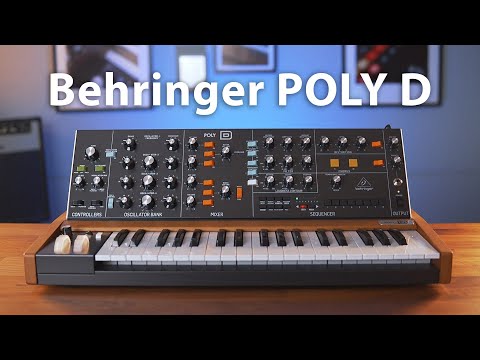

Type
Keyboard Synthesizer
Aftertouch
LFO
Kuvert
ADS (2 )
Oscillatorer
Modulation
Arpeggiator
Effekttyper
MIDI-grænseflade
Bluetooth
Lydmotor
Antallet af taster
Keyboard Type
Synth Action, Velocity sensitive
Taste størrelse
Standard
Polyfoni
Pitch Bend
Ja
Opbevaringsmedium
Hovedtelefon udgang
Indgange
Udgange
Pedal indgange
USB MIDI
Filter
Low Pass, High Pass
Sekvenser
Ja
Strømforsyning
Adapter
UK/EU Strømforsyning er inkluderet
Bredde (cm)
64,7
Højde (cm)
8,9
Dybde (cm)
36
Vægt
11,5 kg
Nettovægt (kg)
10,2
Lavet i
Kina


Alle anmeldelser kommer fra verificerede kunder, der tidligere har købt et produkt hos os.
AI-opsummering af anmeldelser
Baseret på antallet af anmeldelser: 21
Styrker
- Autentisk analog lyd: Kunderne roser konsekvent synthesizerens lydkvalitet og bemærker dens store lighed med den originale Minimoog og dens egnethed til analog musik.
- Enestående værdi: Mange anmeldere fremhæver produktets overkommelige pris og siger, at det tilbyder fantastisk lyd og funktioner til prisen, hvilket gør det til et "bedste køb" for mange.
- Byggekvalitet: Synthesizeren beskrives som havende en solid og høj kvalitetskonstruktion med komponenter, der føles solide og veludstyrede.
- Alsidige afspilningstilstande: Instrumentet tilbyder polyfoniske og monofoniske tilstande, hvor kunderne finder poly-tilstanden velegnet til at skabe pad-lyde, og mono-tilstanden sammenlignelig med en Minimoog med ekstra stemmer.
- Kraftfuld sequencer: Den indbyggede sequencer forbedrer enhedens muligheder betydeligt, på trods af at nogle brugere finder dens betjening kompleks.
Svagheder
- Problemer med byggekvalitet: Nogle brugere rapporterede problemer med den fysiske kvalitet, såsom løse drejeknapper og manglende dekorative dele ved ankomst, hvilket tyder på inkonsekvent kvalitetskontrol.
- Kompleks brugergrænseflade: Sequencerens betjening er bemærkelsesværdig som kompliceret, og brugermanualen anses for uhensigtsmæssig for begyndere, hvilket gør læringskurven stejl for nogle funktioner.
- Begrænset chorus-kontrol: Chorus-effekten, selvom den generelt er populær, mangler justerbare parametre som våd/tør-kontrol, og den anden chorus-indstilling opfattes som overdreven.
Hvad kunderne gentager
Konklusion
Dokumenter
Brugsanvisninger
Producentinformation
Sikkerhedsinstruktioner
Se brugervejledningen for de specifikke sikkerhedsinstruktioner for dette produkt.


