 Albanien
 Amerikas Forenede Stater
 Argentina
 Australien
 Belgien
 Bosnien-Hercegovina
 Brasilien
 Bulgarien
 Canada
 Chile
Chile
 Colombia
 Danmark
 Estland
 Filippinerne
 Finland
 Frankrig
 Grækenland
 Irland
 Italien
 Kroatien
 Letland
 Litauen
 Luxembourg
 Mexico
 Moldova
 Montenegro
 Nederlandene
 New Zealand
 Nordmakedonien
 Norge
Norge
 Polen
Polen
 Portugal
 Rumænien
 Schweiz
 Serbien
 Slovakiet
 Slovenien
 Spanien
 Storbritannien
 Sverige
 Sydafrika
 Tjekkiske Republik
 Tyrkiet
 Tyskland
 Ukraine
 Ungarn
 Østrig







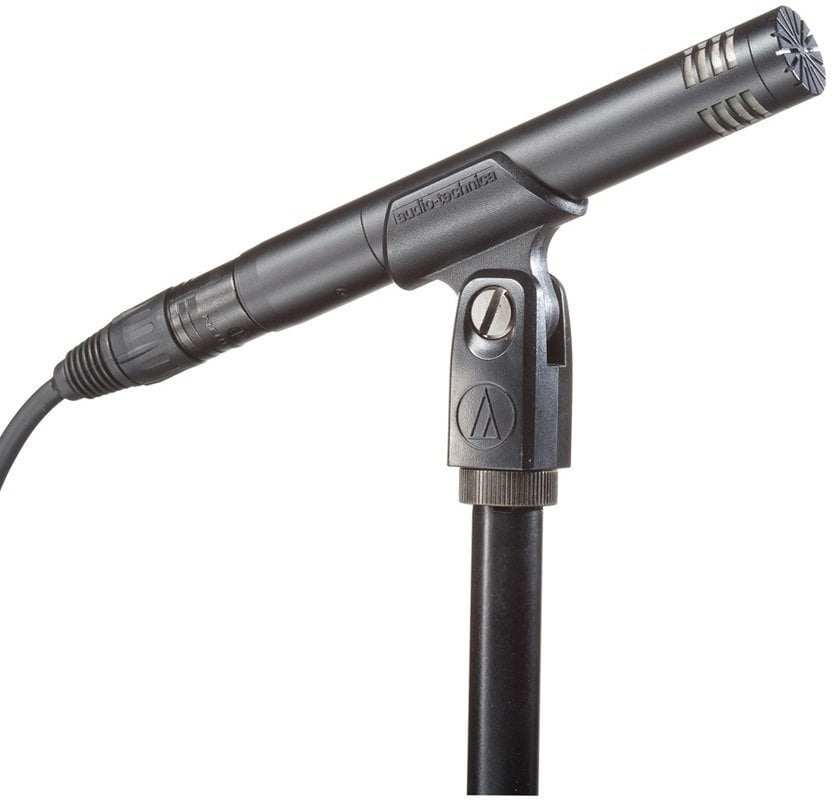
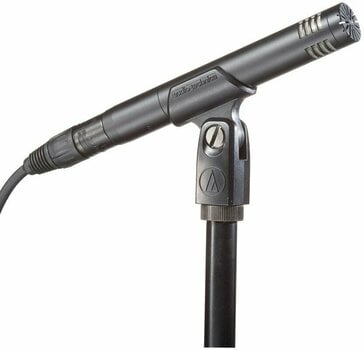
Audio-Technica AT2031 Instrument-kondensator mikrofon
The Audio-Technica AT2031 is a small-diaphragm cardioid condenser microphone built for capturing stringed instruments, overheads, and percussion in both studio and live settings. Its permanently polarized element delivers an extended frequency response with a gentle high-frequency lift, while the 141 dB SPL handling and 17 dB self-noise give it a wide 124 dB dynamic range. The rugged steel body, switchable 150 Hz high-pass filter, and included AT8405a clamp make it a practical choice for home studios, rehearsal rooms, and stages.
- Cardioid polar pattern improves isolation of the desired source and reduces bleed from nearby instruments on stage or in the studio.
- Fixed-charge back plate permanently polarized condenser — provides a smooth, extended response with a slight high-frequency rise for detailed string and percussion capture
- 141 dB max SPL / 124 dB dynamic range — handles loud drum overheads, brass, and aggressive acoustic playing without distortion
- Switchable 150 Hz, 6 dB/octave high-pass filter — tames low-end rumble and stage vibration with a gentle, natural-sounding slope
- Steel body, 134 g, 143 mm long — rugged yet discreet, equally at home in a home studio, rehearsal room, or on a live rig
Audio-Technica AT2031 — Cardioid Condenser Microphone for Strings, Overheads, and Percussion
Audio-Technica AT2031 is a small-diaphragm end-address cardioid condenser microphone engineered for critical studio and live recording of stringed instruments. Its permanently polarized element produces an extended frequency response with a slight rise in the high-frequency region, giving acoustic guitars, violins, cellos, harps, and pianos a more detailed and airy sound. This model is the ideal microphone for stringed instruments in critical studio and live applications, and its combination of low self-noise, high SPL handling, and rugged steel construction makes it equally useful as a drum overhead, hi-hat mic, or auxiliary on a recording session.
What Sets the AT2031 Apart in the Small-Diaphragm Condenser Category
Built around a fixed-charge back-plate permanently polarized condenser element, this unit pairs a star-shaped metal grille with four sets of quadruple slots for precise directivity control. The cardioid polar pattern improves isolation of the desired sound source, while the switchable 150 Hz, 6 dB/octave high-pass filter uses a gentle slope that controls low frequencies in a soft, natural way. Two units can be combined as an affordable ORTF or X/Y stereo pair, and the included AT8405a stand clamp fits any cylindrical microphone with a 21 mm diameter.
Element, Polar Pattern, and Frequency Response — Capturing Detail on Acoustic Sources
The capsule and tuning are what define how an instrument microphone translates the player's touch into a recording. The permanently polarized condenser element and cardioid pattern are tuned to flatter the natural resonances of strings and percussion, with a slight high-frequency lift that adds air without sounding harsh.
- Fixed-charge back plate permanently polarized condenser provides a stable, consistent output that does not require external polarization voltage.
- Polar Pattern: Cardioid — focused pickup that rejects off-axis bleed from nearby monitors or instruments
- Frequency Response: 20 – 20,000 Hz with a slight rise in the high-frequency region for added detail on strings and cymbals
SPL Handling, Dynamic Range, and Self-Noise — Performance Headroom for Loud and Quiet Sources
From the delicate top of a harp to the crack of a snare rimshot, the instrument mic is built to capture both extremes in a single session. A wide dynamic range and low self-noise mean quiet passages stay clean, while the maximum SPL rating keeps loud transients distortion-free.
- Maximum Input Sound Level: 141 dB SPL (1 kHz at 1% T.H.D.) — comfortably handles drum overheads, brass, and aggressive acoustic playing
- Dynamic Range: 124 dB (1 kHz at max SPL) — wide usable range between the noise floor and clipping point
- Noise: 17 dB SPL — low self-noise suited to digital recording chains and quiet acoustic sources
- Signal-to-Noise Ratio: 77 dB (1 kHz at 1 Pa) — clean signal for direct-to-interface recording
Build, Power, and Connectivity — Practical Specs for Studio and Stage
Mechanical and electrical details matter when a microphone moves between the control room, the rehearsal space, and the stage. The steel housing, compact footprint, and standard 48 V phantom power make it drop-in compatible with virtually any modern audio interface or mixing desk.
- Weight of 134 g makes it light enough for compact shock mounts and overhead mic bars.
- Dimensions: 143 mm long, 21 mm maximum body diameter — discreet end-address format that fits standard 21 mm clips
- Open Circuit Sensitivity: -34 dB (19.9 mV) re 1V at 1 Pa — strong output level for direct connection to most preamps and interfaces
- Phantom Power Requirements: 48 V DC, 2 mA typical — standard 48 V phantom from any mixer or audio interface
- Output Connector: Integral 3-pin XLRM-type — balanced output for long cable runs without noise pickup
- Switches: Flat / roll-off (150 Hz, 6 dB/octave) — engage the high-pass filter to cut stage rumble and proximity effect
- Accessories Included: AT8405a stand clamp, windscreen, soft protective pouch — ready to mount and transport straight from the box
Who the Instrument Mic Is For — Studio Engineers, Live Recordists, and Project Studios
It is the right choice for studio engineers, live recordists, and project-studio owners who need a small-diaphragm condenser that excels on stringed instruments, drum overheads, hi-hat, and piano. Musicians upgrading from built-in pickups to a dedicated microphone, classical and acoustic guitarists tracking demos or albums, and live sound engineers looking for a discreet, rugged auxiliary mic for percussion and overheads will find it effective. Two units also work well as an affordable ORTF or X/Y stereo pair for chamber ensembles, drum overheads, or piano.

Egnet til
Batteridrift
Nej
Lavet i
Japan
Dokumenter
Brugsanvisninger
Producentinformation
Sikkerhedsinstruktioner
Se brugervejledningen for de specifikke sikkerhedsinstruktioner for dette produkt.