 Albanien
 Amerikas Forenede Stater
 Argentina
 Australien
 Belgien
 Bosnien-Hercegovina
 Brasilien
 Bulgarien
 Canada
 Chile
Chile
 Colombia
 Danmark
 Estland
 Filippinerne
 Finland
 Frankrig
 Grækenland
 Irland
 Italien
 Kroatien
 Letland
 Litauen
 Luxembourg
 Mexico
 Moldova
 Montenegro
 Nederlandene
 New Zealand
 Nordmakedonien
 Norge
Norge
 Polen
Polen
 Portugal
 Rumænien
 Schweiz
 Serbien
 Slovakiet
 Slovenien
 Spanien
 Storbritannien
 Sverige
 Sydafrika
 Tjekkiske Republik
 Tyrkiet
 Tyskland
 Ukraine
 Ungarn
 Østrig







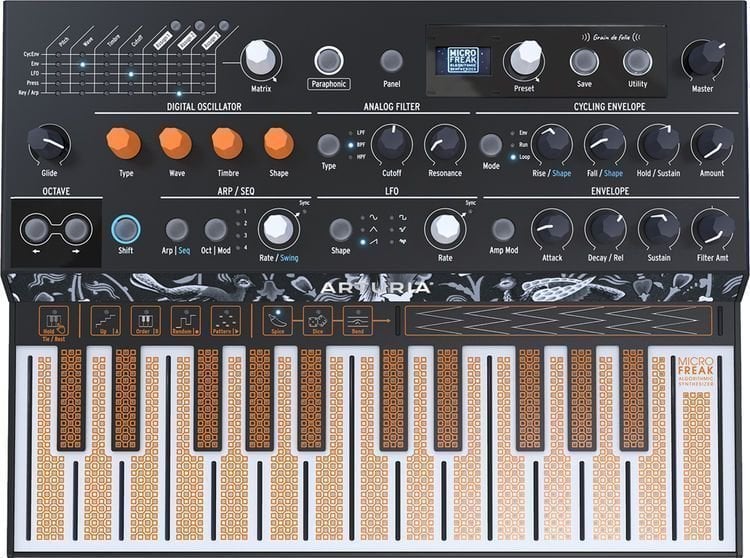
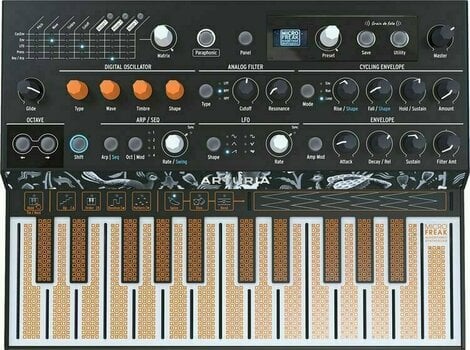
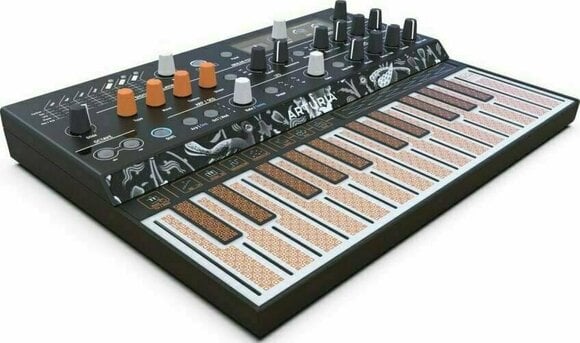




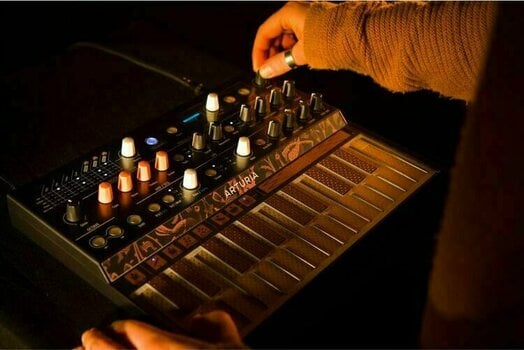

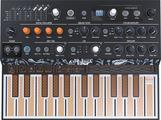
Arturia Microfreak Synthesizer
The Arturia MicroFreak is a hybrid hardware synthesizer that pairs a multi-algorithm digital oscillator with an analog SEM-style filter, all played through a flat 25-key capacitive PCB keybed with polyphonic aftertouch. It packs 21 oscillator modes, a 64-step sequencer with four automation lanes, and a 5×7 modulation matrix into a 1.02 kg chassis that runs from USB power.
- 21 digital oscillator modes covering wavetable, Karplus-Strong, virtual analog, granular, speech synthesis, and a vocoder
- Analog 12 dB/octave state-variable filter inspired by the classic SEM design, with self-oscillation
- 25-key flat capacitive keybed with polyphonic aftertouch for per-key expressive control
- 64-step sequencer with Spice & Dice randomizers and four parameter automation tracks per preset
- Compact 1.02 kg body powered via USB, with CV/Gate, MIDI, and clock I/O for studio and stage setups
Arturia MicroFreak Hybrid Synthesizer — A 25-Key Capacitive Keybed Meets 21 Digital Oscillator Modes
\nThe Arturia MicroFreak is an experimental hybrid synthesizer that fuses a multi-algorithm digital oscillator engine with a true analog SEM-style filter, all driven by a flat capacitive PCB keybed. This model gives producers, sound designers, and live performers a single compact instrument capable of wavetable, virtual analog, granular, physical modeling, and speech synthesis tones. With 21 oscillator modes, polyphonic aftertouch, and a 64-step sequencer, this synth delivers an unusually wide sonic palette for its size and price tier.
\nStandout Features: A Capacitive Keybed, a Hybrid Engine, and a Mod Matrix
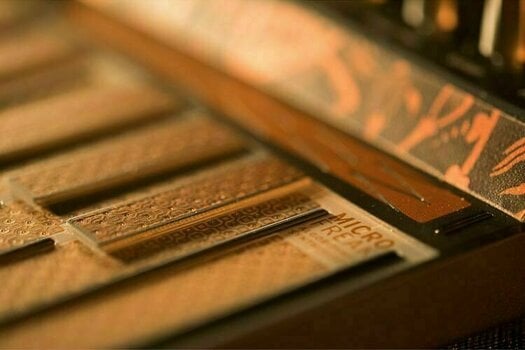
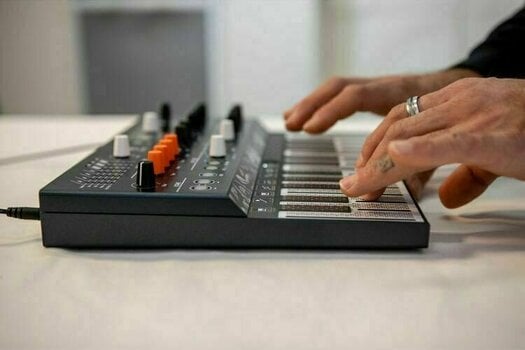
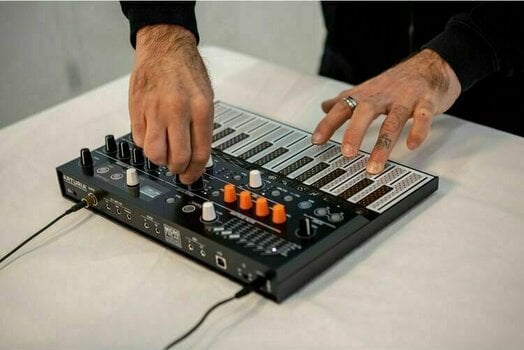
\nWhat separates the unit from conventional hardware synths is its flat, touch-sensitive 25-key capacitive PCB keybed that registers both velocity and polyphonic aftertouch based on the firmness and surface area of finger contact. The hybrid architecture routes a fully digital oscillator through a 12 dB/octave analog state-variable filter inspired by the classic Oberheim SEM, capable of low-pass, band-pass, and high-pass operation with self-oscillation. A 5-source by 7-destination modulation matrix with three user-defined routings, plus Spice and Dice randomizers in the sequencer, lets adventurous players generate patterns that surprise even the person programming them.
\nOscillator Engine — 21 Modes, One Instrument
\nThe digital oscillator is the heart of this synth and the reason it can sound like dozens of different synths in a single preset. Modes range from Basic Waves and Virtual Analog through Wavetable, Karplus-Strong physical modeling, Harmonic additive synthesis, and three granular engines, with seven algorithms adapted from Mutable Instruments' Plaits and three co-designed with Noise Engineering.
\n- \n
- Oscillator modes offer 21 digital algorithms covering wavetable, virtual analog, FM, granular, speech, vocoder, and physical modeling in one engine. \n
- Polyphony: monophonic, paraphonic, or unison up to 4 voices — switchable architecture for leads, stacked basses, or four-note chords \n
- Filter: analog 12 dB/octave state-variable LPF/BPF/HPF — SEM-inspired circuit that can self-oscillate for squelchy resonance \n
Keyboard & Expression — Polyphonic Aftertouch on a Flat PCB
\nThe 25-key capacitive keybed is its most divisive and most expressive feature. Each key senses pressure through the contact area of the fingertip, so rolling a finger flatter increases the aftertouch value, opening the door to per-note modulation that traditional moving keys cannot match.
\n- \n
- Keys Number: 25 capacitive PCB keys — flat, rugged, and immune to mechanical wear from transport \n
- Keyboard Type: Touch-Sensitive Capacitive Keybed — registers velocity from the moment of contact \n
- Aftertouch: polyphonic — each of the 25 keys can drive a different modulation target simultaneously \n
Sequencer, Modulation & Connectivity — Built for the Studio and the Stage
\nBeyond the oscillator and keybed, this instrument ships with a deep performance sequencer and a flexible modulation system that turns the front panel into a patchable playground. The 64-step sequencer stores two patterns per preset and four lanes of parameter automation, while the cycling envelope can act as either an envelope or a second LFO with variable rise and fall times.
\n- \n
- Sequencer: 64-step polyphonic sequencer with 4 automation tracks — long enough for full four-bar phrases with evolving parameter motion \n
- Envelope: ADSR plus Cycling Envelope — main ADSR shapes amplitude, while the cycling modulator doubles as envelope or LFO \n
- LFO: 1 LFO with Sine, Tri, Saw, Square, Random, and Slew Random shapes — syncable for tempo-locked movement \n
- Modulation: 5 sources × 7 destinations matrix with 3 user slots — virtually rewire the signal chain without cables \n
- Preset Memory: 512 slots including 320 factory presets — generous storage for both stock and user patches \n
- I/O: USB, MIDI in/out, CV/Gate/Pressure, analog clock in/out — integrates with DAWs, Eurorack, and vintage hardware \n
- Power: USB or included PSU — low-voltage digital oscillators mean no bulky power brick required \n
Who Is It For — Producers, Sound Designers, and Live Performers
\nThe MicroFreak is the right choice for electronic producers, sound designers, and live performers who want a hybrid synth that can morph between wavetable leads, Karplus-Strong plucks, granular textures, and analog-filtered basses without switching instruments. Bedroom producers benefit from the 64-step sequencer with Spice and Dice randomizers, which can generate evolving patterns even when inspiration is low. Modular players will appreciate the CV/Gate and Pressure outputs that let the unit drive Eurorack voices, while the polyphonic aftertouch keybed makes it a capable controller for software instruments in a DAW. At 1.02 kg and USB-powered, it travels easily to gigs, jam sessions, and studio setups where space is tight.
\nBrand & Product Story — Arturia's Hybrid Mutiny
\nArturia built this instrument as a deliberate departure from the analog monosynth trend, blending digital oscillator algorithms borrowed from Mutable Instruments' open-source Plaits engine with a true analog SEM-style filter. The instrument carries the phrase \"Grain de folie\" — a touch of madness — on its front panel, signaling its experimental intent. Since launch, ongoing firmware updates have expanded the oscillator count from the original 12 modes to 21, adding sample playback, granular processing, and a vocoder.
",description_sk:

Type
Desktop Synthesizer
Aftertouch
LFO
Kuvert
ADSR (1 ), Cycling Envelope
Oscillatorer
Modulation
Arpeggiator
Effekttyper
Antal forudindstillinger
MIDI-grænseflade
Bluetooth
Lydmotor
Antallet af taster
Keyboard Type
Polyphonic Aftertouch, Touch-Sensitive Capacitive Keybed
Taste størrelse
Standard
Polyfoni
Pitch Bend
Nej
Opbevaringsmedium
Farve
Hovedtelefon udgang
Indgange
Pedal indgange
USB MIDI
USB til enhed
USB til vært
Filter
Analog State Variable Filter, 12dB/Octave, Low Pass, High Pass, Band Pass
Sekvenser
Ja
UK/EU Strømforsyning er inkluderet
Bredde (cm)
31,1
Højde (cm)
5,5
Dybde (cm)
23,3
Vægt
1 kg
Nettovægt (kg)
1,02
Lavet i
Kina


Alle anmeldelser kommer fra verificerede kunder, der tidligere har købt et produkt hos os.
AI-opsummering af anmeldelser
Baseret på antallet af anmeldelser: 54
Styrker
- Lydens alsidighed: Kunderne sætter pris på det brede udvalg af lydmuligheder takket være dens unikke oscillator og adskillige oscillatortyper, hvilket giver mulighed for omfattende lyddesign og eksperimenter.
- Bærbarhed og størrelse: Synthesizeren er kendt for sit lette og kompakte design, hvilket gør den nem at transportere til liveoptrædener eller musikproduktion på farten.
- Unikt keyboard: Det utraditionelle kapacitive keyboard fremhæves som en nøglefunktion, der tilbyder nye soniske muligheder og en engagerende fysisk spilleoplevelse.
- Værdi for pengene: Mange kunder anser denne synthesizer for en fremragende investering, der tilbyder høj kvalitet og omfattende funktioner til en overkommelig pris.
- USB-strømforsyning: Muligheden for at strømforsyne enheden via USB, inklusive powerbanks, er en praktisk funktion, der forbedrer dens bærbarhed og brugervenlighed.
Svagheder
- Problemer med USB-forbindelse: Nogle brugere rapporterede lejlighedsvise problemer med USB-forbindelse på macOS, hvilket krævede en genstart af enheden for at genetablere forbindelsen.
- Mangel på indbyggede effekter: Fraværet af integrerede effekter bemærkes som en begrænsning, selvom kunderne antyder, at det nemt kan kompenseres for med ekstern software eller pedaler.
Hvad kunderne gentager
Konklusion
Dokumenter
Brugsanvisninger
Producentinformation
Sikkerhedsinstruktioner
Se brugervejledningen for de specifikke sikkerhedsinstruktioner for dette produkt.


